What makes a cursive font right for wedding invitations?
The best cursive wedding font for invitations balances elegance with legibility. It should feel personal not overly ornate, not too plain. Think of it as handwriting you’d want to trace with your finger: smooth curves, consistent spacing, and subtle contrast between thick and thin strokes.
When does a cursive script actually work on paper?
Cursive fonts shine on printed stationery when the design is clean and the text is minimal like names, dates, and venue lines. They fall short in dense paragraphs or small sizes. For example, a delicate script like Great Vibes reads beautifully at 24pt on an invitation but blurs at 10pt in RSVP details. That’s why pairing it with a simple sans-serif (like Lato or Montserrat) for secondary text keeps hierarchy clear.
How to match a cursive font to your wedding’s tone
Your choice reflects more than aesthetics it signals intention. A vintage-inspired event leans into flourishes and ink-trail textures, like the vintage cursive wedding font for save-the-dates. A modern garden ceremony suits airy, open letters think light weight and generous letter spacing. For intimate vow books, consider a warmer, slightly irregular script like romantic cursive script font for vow books, where human imperfection adds sincerity.
Common technical missteps and how to fix them
Printing cursive fonts often fails due to thin strokes vanishing on low-resolution printers or cheap cardstock. Avoid ultra-light weights unless you’re using professional offset printing. Also, don’t stretch or skew the font to “fit” it breaks rhythm and distorts spacing. Instead, adjust tracking (letter spacing) or line height. Test print on your final paper type first. If letters bleed or blur, switch to a bolder cut or add a hairline stroke in design software.
Can you adjust a cursive font yourself?
Yes but only with purpose. Lightly increasing tracking helps readability without sacrificing grace. Adding subtle baseline shifts to capital letters (like lifting the “A” or “T”) can improve visual flow. Avoid over-editing: manually altering individual letters often creates inconsistency. Stick to global adjustments in tools like Adobe InDesign or Affinity Publisher. For digital-only uses (e.g., email invites), prioritize web-safe cursive alternatives like Parisienne or Dancing Script, which render reliably across devices.
Your quick checklist before finalizing
- Print a full-size mockup on your chosen paper stock
- Read the text aloud does it feel natural, not strained?
- Check contrast: dark ink on ivory paper works better than light gray on cream
- Verify that paired fonts (for addresses, RSVPs, etc.) share similar x-height and rhythm
- Review the full suite: does the same elegant cursive script font for wedding stationery hold up across menus, programs, and signage?
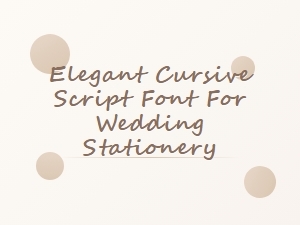 Elegant Cursive Script Font for Wedding Stationery
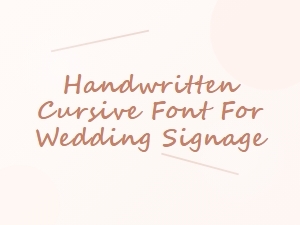 Handwritten Cursive Fonts for Elegant Wedding Signage
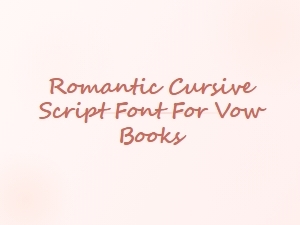 Romantic Cursive Script Font for Vow Books
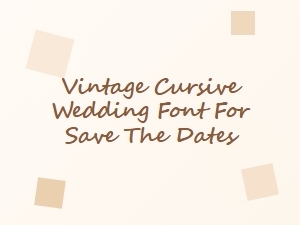 Vintage Cursive Wedding Font for Save the Dates
 Vintage Cursive Invitations for Rustic Weddings
 Best Cursive Wedding Invitations for Modern Couples